Unlimited OCR: One-Shot Long-Horizon Parsing
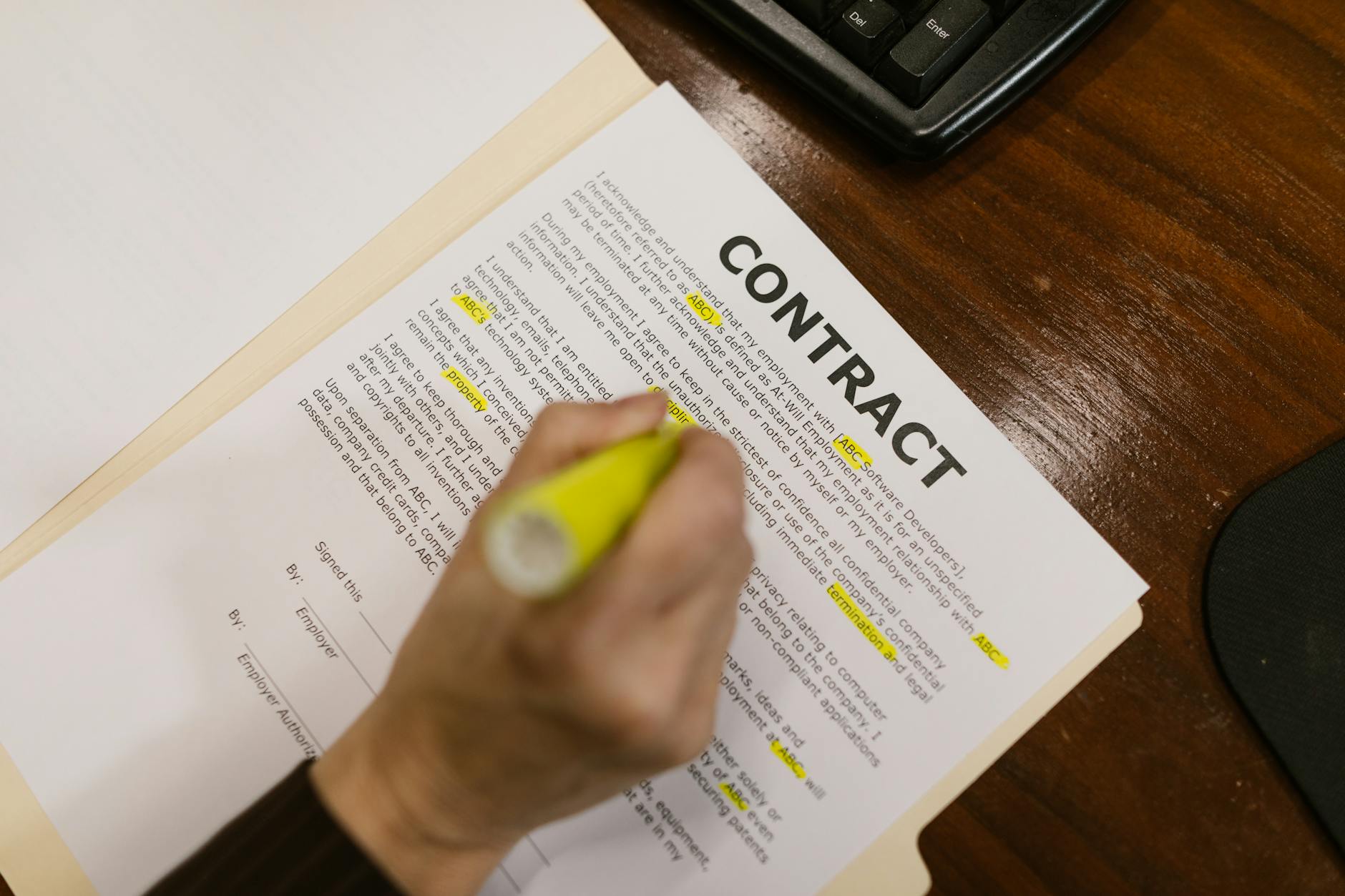
The financial industry is drowning in documents. From invoices and bank statements to loan applications and regulatory filings, the sheer volume of paperwork is staggering. Traditionally, processing these documents has been a manual, time-consuming, and error-prone process. However, advancements in Optical Character Recognition (OCR) and, more specifically, techniques like one-shot long-horizon parsing are changing the game. This article explores how unlimited OCR, powered by these cutting-edge technologies, is transforming financial document processing, boosting efficiency, and unlocking valuable data insights.
The Challenges of Traditional OCR in Finance
Standard OCR has been around for decades, allowing computers to “read” text from images and scanned documents. However, applying it to the financial sector presents unique hurdles:
- Document Variety: Financial documents come in countless formats – PDFs, scanned images, handwritten forms, and more. Traditional OCR struggles with variations in layout, font, and quality.
- Complex Layouts: Tables, multi-column layouts, and embedded images are common in financial reports, making accurate text extraction difficult.
- Low-Quality Scans: Often, documents are scanned at low resolution or are faded or damaged, reducing OCR accuracy.
- Data Sensitivity: Financial data is highly sensitive, requiring robust security measures throughout the OCR process.
- Manual Correction: Even with the best OCR software, manual review and correction are often necessary, negating many of the potential time savings.
These limitations mean that traditional OCR often requires significant human intervention, hindering automation efforts and increasing costs. This is where the next generation of OCR – fueled by Artificial Intelligence (AI) and machine learning (ML) – steps in.
Introducing Unlimited OCR: Beyond Basic Text Recognition
“Unlimited OCR” isn't a specific product, but rather a descriptor for advanced OCR solutions leveraging powerful AI and ML capabilities. These solutions overcome the limitations of traditional OCR through techniques like:
- Machine Learning (ML): ML algorithms are trained on massive datasets of financial documents, allowing them to learn and adapt to different layouts, fonts, and document types.
- Deep Learning: A subset of ML, deep learning utilizes artificial neural networks with multiple layers to analyze complex patterns in documents, dramatically improving accuracy.
- Natural Language Processing (NLP): NLP helps understand the meaning of the text, not just the characters, allowing for more accurate data extraction.
- Image Pre-processing: Advanced algorithms automatically correct for image distortions, noise, and low resolution, improving OCR accuracy even with poor-quality scans.
- Contextual Understanding: The software understands the context of the document (e.g., an invoice versus a bank statement) to apply the appropriate extraction rules.
These technologies combine to create OCR systems that offer far greater accuracy, speed, and automation capabilities than their predecessors. They represent a shift from simple character recognition to intelligent document processing.
One-Shot Long-Horizon Parsing: The Key to Financial Document Intelligence
A critical component of this new generation of OCR is one-shot long-horizon parsing. Let's break down what this means:
- Long-Horizon Parsing: Traditional OCR often focuses on recognizing text in isolated blocks. Long-horizon parsing, however, considers the entire document and the relationships between different elements. It understands the overall context and structure, allowing it to extract data more accurately. Think of it as reading a whole story instead of just individual sentences.
- One-Shot Learning: Previously, training OCR models required thousands of labeled examples for each document type. One-shot learning allows the model to learn from just one example. This dramatically reduces the time and cost of adapting the OCR system to new document types. It’s particularly useful in finance, where document formats can vary widely.
How it works in practice: Imagine an invoice. A traditional OCR system might identify "Invoice Number" and "Total Amount" as text. A one-shot long-horizon parsing system, however, understands that the "Total Amount" is likely to be a numerical value and is positioned within a specific section of the invoice, near subtotal and tax information. It can therefore accurately extract the amount even if the formatting is slightly different from previous invoices it has seen.
This capability is particularly important for handling complex financial documents with varying layouts and content.
Benefits of Unlimited OCR with One-Shot Parsing for Finance
Implementing unlimited OCR with one-shot long-horizon parsing offers significant benefits for financial institutions and businesses:
- Increased Efficiency: Automate document processing, reducing manual data entry and freeing up employees for more strategic tasks.
- Reduced Costs: Lower labor costs associated with manual data processing and minimize errors that can lead to costly mistakes.
- Improved Accuracy: Extract data with greater precision, minimizing errors and ensuring data integrity.
- Faster Processing Times: Accelerate document workflows, enabling quicker decision-making and improved customer service.
- Enhanced Data Insights: Unlock valuable data trapped in unstructured documents, enabling better financial analysis and reporting.
- Scalability: Easily handle increasing volumes of documents without requiring significant increases in manual effort.
- Compliance: Improve regulatory compliance by ensuring accurate and auditable data trails.
Applications in the Financial Industry
Here are some specific examples of how unlimited OCR with one-shot parsing can be applied in the financial industry:
- Invoice Processing: Automate invoice data capture, streamline accounts payable, and reduce invoice processing costs. https://example.com/ – Check out these document scanners for high-quality invoice capture.
- Loan Application Processing: Extract data from loan applications, verify information, and automate credit risk assessment.
- Bank Statement Analysis: Automate the extraction of transaction data from bank statements for reconciliation and fraud detection.
- Financial Reporting: Extract data from financial reports, automate report generation, and improve the accuracy of financial statements.
- Know Your Customer (KYC) Compliance: Automate the extraction of information from identity documents for KYC verification.
- Mortgage Processing: Automate the processing of mortgage applications and supporting documentation.
- Insurance Claim Processing: Extract data from insurance claims forms and supporting documentation.
Choosing the Right Unlimited OCR Solution
Selecting the right OCR solution requires careful consideration. Here are some key factors to evaluate:
- Accuracy: Look for solutions with high accuracy rates, especially on complex financial documents.
- Scalability: Ensure the solution can handle your current and future document volumes.
- Security: Choose a vendor with robust security measures to protect sensitive financial data.
- Integration: Select a solution that integrates seamlessly with your existing systems (e.g., ERP, CRM).
- Customization: Ensure the solution allows you to customize extraction rules and workflows to meet your specific needs.
- Pricing: Compare pricing models and choose a solution that fits your budget.
- Support: Look for a vendor that offers excellent customer support and training.
Many vendors now offer cloud-based OCR services, which can be a cost-effective and scalable option. You might also consider solutions that offer both on-premise and cloud deployment options. https://example.com/ – Explore different cloud storage options to store your extracted data securely.
The Future of Financial Document Processing
Unlimited OCR powered by one-shot long-horizon parsing is just the beginning. As AI and ML technologies continue to evolve, we can expect even more sophisticated document processing capabilities. Future developments may include:
- Hyperautomation: Combining OCR with Robotic Process Automation (RPA) to fully automate end-to-end document workflows.
- Intelligent Document Understanding (IDU): More advanced solutions that can understand the intent of a document, not just the text.
- Real-time Document Processing: Processing documents in real-time, enabling instant decision-making.
- Generative AI integration: Using LLMs to summarize, classify, and interpret complex financial reports.
Disclaimer
Affiliate Disclosure: This article contains affiliate links, indicated by https://example.com/ and https://example.com/. If you click on these links and make a purchase, we may receive a commission at no extra cost to you. This helps support our website and allows us to continue providing valuable content. We only recommend products and services that we believe are beneficial to our readers.