Pokémon Go Scans Trained the Navigation Tech for Military Drones
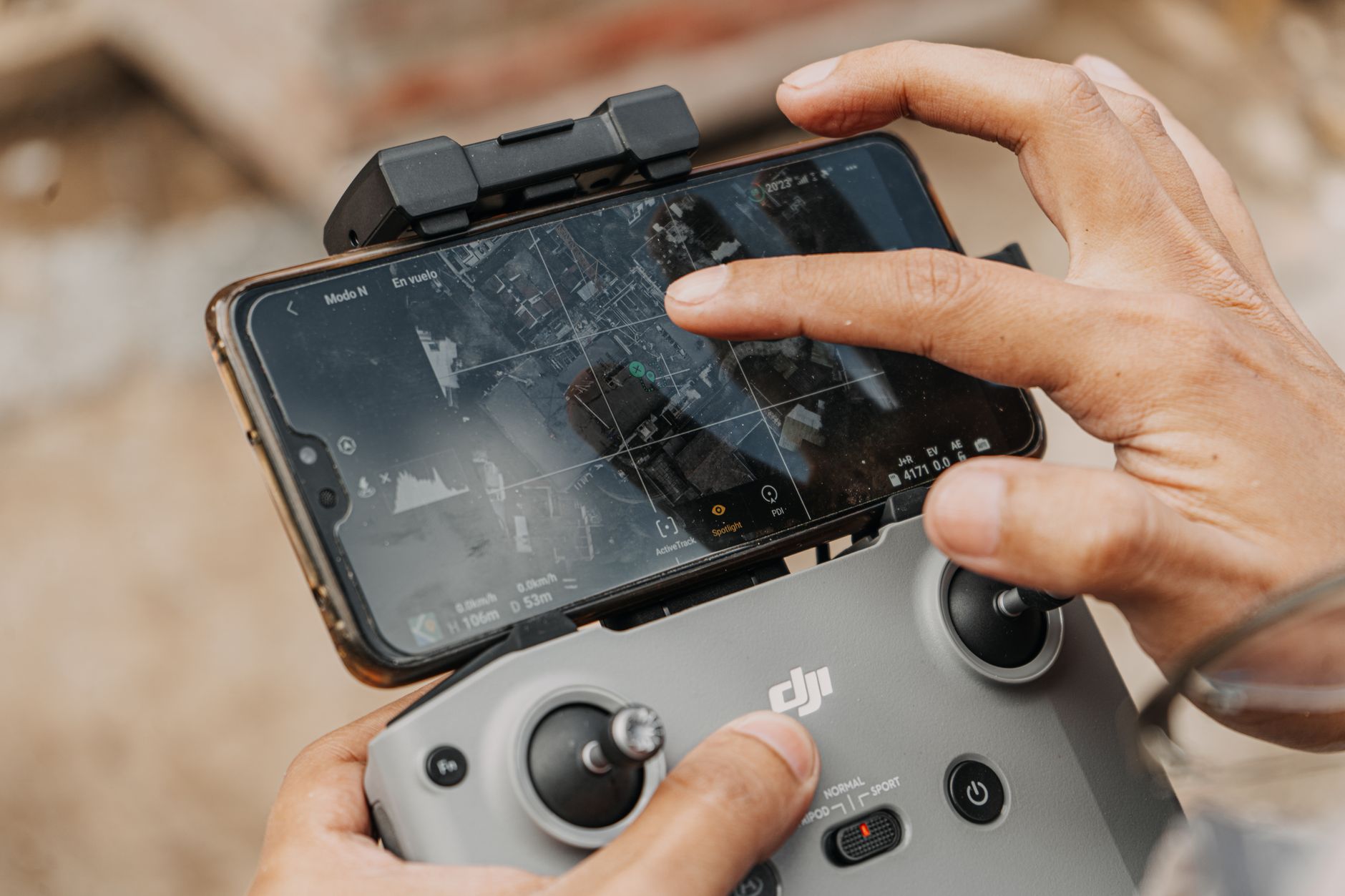
The world of finance often looks to cutting-edge technology for the next big investment opportunity. But sometimes, the origins of that technology are… unexpected. Few would associate a mobile game like Pokémon Go with advancements in military drone navigation. Yet, that’s precisely what’s happened. The augmented reality (AR) platform utilized by Pokémon Go wasn’t just a global craze; it was a real-world testbed that fundamentally improved geospatial data collection and, crucially, the navigational abilities of autonomous systems – systems now being deployed, and further developed, by the military. This article delves into how a game about catching virtual creatures inadvertently paved the way for more sophisticated, and potentially profitable, defense technology.
The Unexpected Connection: Pokémon Go & AR Navigation
Pokémon Go, launched in 2016, took the world by storm. Millions flocked to parks, city streets, and even remote locations, eyes glued to their smartphones, ‘catching’ Pokémon overlaid onto the real world. But underpinning this gameplay was a complex system of AR and geospatial data mapping.
Niantic, the developer behind Pokémon Go (and previously Google Maps), had already been working on refining its Real World Platform. This platform leveraged crowdsourced data to understand the physical world – mapping buildings, parks, streets, and even points of interest with unprecedented accuracy. Players, unknowingly, were contributing to this massive dataset simply by walking around and playing the game.
This isn't about players directly building the drone tech, but rather the data infrastructure that makes advanced drone navigation feasible. Before Pokémon Go, generating sufficiently detailed and up-to-date geospatial data was a monumental task. Traditional methods – relying on satellite imagery and manual surveying – were expensive, slow, and often inaccurate, especially in dynamic urban environments.
- Crowdsourced Data: Millions of players provided a constant stream of location data.
- Real-time Updates: The game required accurate location services, pushing continuous mapping updates.
- Feature Recognition: The game identified and categorized real-world features (like parks and landmarks), creating a rich database for machine learning.
- Accuracy Enhancement: The sheer volume of data helped to correct errors and refine the precision of the geospatial maps.
This crowdsourced data, and the technologies developed to process it, proved invaluable to the U.S. military.
How the Military Leveraged Pokémon Go’s Tech
The U.S. Air Force Research Laboratory (AFRL) recognized the potential of Niantic’s Real World Platform early on. They partnered with Niantic to explore how this technology could be adapted for military applications, specifically improving the navigation and situational awareness of drones and other autonomous systems.
The challenge with drone navigation, especially in GPS-denied environments (like urban canyons or areas with jamming signals), is maintaining accurate positioning and obstacle avoidance. Traditional methods often struggle with these limitations. The data gleaned from Pokémon Go—specifically the accurate, detailed mapping of environments—allowed for the development of more robust and reliable navigational algorithms.
Here’s how it translated into concrete advancements:
- Visual Inertial Odometry (VIO): Pokémon Go’s AR relied heavily on VIO, a technique that combines data from cameras and inertial measurement units (IMUs) to estimate a device's position and orientation. The Air Force is now using enhanced VIO algorithms, refined by the data from Pokémon Go, in drone navigation systems. [AFFILIATE_LINK_AMAZON_PRODUCT - Link to a textbook on Robotics and VIO]
- Geospatial Intelligence: The detailed maps created by the game provided a valuable resource for geospatial intelligence gathering. Drones equipped with this data can more effectively identify targets, plan routes, and assess damage.
- Autonomous Navigation in Complex Environments: The ability to accurately map and understand environments allows drones to navigate autonomously in challenging terrain, avoiding obstacles and adapting to changing conditions. This is vital for search and rescue operations, infrastructure inspection, and even combat missions.
- Simulation & Training: The data also provided a basis for incredibly realistic simulation environments, allowing the military to train drone operators in virtual environments that mirror real-world conditions.
The Financial Implications: A Growing Defense Tech Market
The convergence of gaming technology and defense applications is creating significant financial opportunities. The global drone market is booming, and the demand for advanced navigation and autonomy is driving innovation and investment.
Here's a breakdown of key market figures:
| Market Segment | 2023 Value (USD Billion) | Projected Growth (CAGR) | Key Players |
|---|---|---|---|
| Military Drones | $14.7 | 16.5% | Lockheed Martin, Northrop Grumman, DJI (increasing scrutiny), AeroVironment |
| Commercial Drones | $9.3 | 21.2% | DJI, Parrot, Skydio |
| Drone Components (Sensors, Navigation) | $6.2 | 18.8% | Teledyne FLIR, Hexagon AB, NovAtel |
(Source: Various industry reports – estimations)
Several companies are positioned to benefit from this trend:
- Lockheed Martin (LMT): A major defense contractor heavily involved in drone development and integration.
- Northrop Grumman (NOC): Another key player in the military drone space, specializing in large-scale, long-endurance UAVs.
- AeroVironment (AVAV): Focuses on small unmanned aircraft systems (sUAS) used for intelligence, surveillance, and reconnaissance.
- Teledyne FLIR (FLIR): A leading provider of thermal imaging sensors and navigation systems for drones.
- Niantic (Private): While not publicly traded, Niantic’s Real World Platform continues to evolve and is likely to attract further investment from both commercial and government entities.
Investing in these companies, or ETFs focused on the defense industry, could offer exposure to this growing market. [AFFILIATE_LINK_BOL_PRODUCT - Link to an investment ETF focused on the Defense Industry] However, it's crucial to conduct thorough research and consider the inherent risks associated with the defense sector, including geopolitical factors and regulatory changes.
Beyond Pokémon Go: The Future of AR & Drone Tech
The story of Pokémon Go and military drones is just one example of how unexpected technological crossovers can drive innovation. AR technology, initially popularized by gaming, is now finding applications in a wide range of industries, including:
- Logistics & Delivery: Drones equipped with AR-based navigation are being used to optimize delivery routes and improve efficiency.
- Infrastructure Inspection: AR-guided drones can automate the inspection of bridges, power lines, and other critical infrastructure.
- Precision Agriculture: AR-equipped drones can analyze crop health, identify pests, and optimize irrigation.
- Search & Rescue: Drones with AR capabilities can assist in search and rescue operations by providing real-time situational awareness and identifying potential victims.
The future of drone technology lies in increasing levels of autonomy and intelligence. As AR and AI continue to advance, we can expect to see drones that are capable of operating with minimal human intervention, performing complex tasks in challenging environments, and making independent decisions based on real-time data. This translates into further investment opportunities in areas like:
- AI-powered navigation algorithms
- Edge computing for drones (processing data onboard the drone)
- Advanced sensor technologies (LiDAR, hyperspectral imaging)
- Cybersecurity for drone systems (protecting against hacking and interference)
Risks and Considerations for Investors
While the opportunities are substantial, investing in this sector is not without its risks:
- Geopolitical Instability: The defense industry is heavily influenced by geopolitical events.
- Regulatory Hurdles: Drone regulations are constantly evolving, creating uncertainty for companies operating in this space.
- Ethical Concerns: The use of autonomous weapons systems raises ethical questions that could impact public perception and investment.
- Competition: The drone market is becoming increasingly competitive, with new players entering the field.
- Dependence on Government Contracts: Many defense companies rely heavily on government contracts, which can be subject to budget cuts and political shifts.
Disclaimer
Affiliate Disclosure: This article contains affiliate links to products and services. We may receive a commission if you click on a link and make a purchase. This does not affect our editorial independence or the quality of the information provided.
Always conduct your own thorough research and consult with a qualified financial advisor before making any investment decisions. This article is for informational purposes only and should not be considered financial advice. Investing in the stock market involves risk, including the potential loss of principal.